

Buddhist merit : ค้นหาหนังสือธรรมะ หน้า 5 / 9
หน้าหนังสือทั้งหมด
146
Untitled
didn't want to do it any more. She explained, "It's not right for me to do it . . . against the regulations. Normally it must be a person outside the temple who leads the Kathina Ceremony." Until that
No content was provided for processing.
56
The Miraculous Establishment of Dhammakaya Temple
pinnacle of success as we know today. Chayaboon and Padej were the driving force behind many of Khun Yai's success.
After the ordination of Luang Por Dhammajayo, Khun Yai felt the time was right for
The establishment of the Dhammakaya Temple is a testament to Khun Yai's vision and determination. With only 3,200 Baht, she believed in the power of merit and, on Lady Prayad's birthday, managed to ac
185
Survival of Buddhism and the Dhammakaya Temple
hoped that future generations would study Buddhism to gain a correct understanding of the realities of life. Thus, if our ancestors were still alive, we can imagine how they would feel about our carel
The survival of Buddhism in Thailand is under threat due to abandoned temples and corrupt practices. The Dhammakaya Temple, however, stands resilient, guided by Buddhist principles imparted by its fou
56
Concepts in Buddhist Terminology
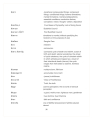
สังขาร (sankhara) compounded things; component things; conditioned things; kamma formations; mental formations; mental predispositions; essential conditions; conductive factors; conception; notion; th
Text discusses various Buddhist terms and concepts including 'สังขาร' (sankhara) which refers to conditioned things and mental formations. It details the concept of 'สังสาร' (samsara) as the cycle of
185
Universal Peace Award by WBSY
Universal Peace Award
World Buddhist Sangha Youth (WBSY) is a world class Buddhist organisation. The organisation has many members who are Buddhists from every Buddhist sect; Theravada, Mahayana and
World Buddhist Sangha Youth (WBSY) is a premier Buddhist organization comprised of members from various traditions including Theravada, Mahayana, and Vajrayana. They acknowledge the significant dedica
92
The Role of Sa-Paper in Buddhist Manuscripts
are also certain exceptions to this. For example, Buddhist scriptures that are chanted daily are always copied on sa-paper manuscript for the convenience of page turning and reading. Secular literatur
Sa-paper, made by local artisans, serves as a practical alternative for copying both Buddhist and secular texts in Sipsong Panna. Although less symbolic than palm leaves, sa-paper's ease of use and du
81
หลักฐานธรรมภายในคัมภีร์พุทธโบราณ
หลักฐานธรรมภายในคัมภีร์พุทธโบราณ 1 ฉบับรวมงานวิจัยโดยอ้อย
Baums, Stefan. 2009. “A Gāndhārī Commentary on Early Buddhist Verses: British Library Kharosṭhī Fragments 7, 9, 13 and 18.” PhD Dissertation.
เนื้อหาเกี่ยวกับการศึกษาคัมภีร์พุทธโบราณตั้งแต่ชิ้นส่วนต่างๆ ของคัมภีร์ไปจนถึงการแปลข้อความในภาษาอังกฤษ นอกจากนี้ยังมีการศึกษาเกี่ยวกับ Buddhist texts จากหลายแหล่ง เช่น Gāndhārī, Sanskrit, และ Tibetan
65
Exchange Activities of Dhammakaya Foundation and Chung-Hwa Institute
Exchange Activities
In accordance with an agreement signed between the Chung-Hwa Institute of Buddhist Studies and the Dhammakaya Foundation on 5 July 1990, monks from the Dhammakaya Foundation are ex
The Dhammakaya Foundation has been actively engaged in exchange activities since 1990, collaborating with the Chung-Hwa Institute of Buddhist Studies for prolonged studies. Notable partnerships includ
56
The Story of the Disciples of Non-Buddhist Teachers
6 The Story of the Disciples of Non-Buddhist Teachers
While residing at the Jetavana Monastery, the Buddha spoke these verses, with reference to some disciples of the Titthis (non-Buddhist ascetics).
In the context of the Jetavana Monastery, the Buddha narrates a tale involving disciples of non-Buddhist ascetics known as Titthis. These disciples prohibited their children from mingling with those o
3
Garudhamma 8: Exploring Gender Issues in Buddhism
Garudhamma 8
What did the Lord Buddha Establish?
Wilaiporn SUCHARITTHAMMAKUL
Abstract
This paper deals with the Buddhist outlook on gender issues. Contemporary feminists have extrapolated moder
This paper examines the Buddhist perspective on gender issues, particularly the eight garudhamma, which have been contested in modern debates around gender equality. It investigates whether these teac

27
การประชุมและสัมมนา
กัลฯสมหมาย ดรสาคู กัลฯนพ.พรชัย พิญญพงษ์ กัลฯธีระ
ภาพ เพชรมาลัยกุล และกัลฯพลสันต์ พฤกษ์ศุภชาติ เป็น
ผู้แทนมูลนิธิธรรมกาย ซึ่งในครั้งนี้ได้มีโอกาสเข้าพบบุคคล
สำคัญต่างๆ หลายท่าน เช่น นายกรัฐมนตรี รัฐมนต
กัลฯสมหมาย ดรสาคู กัลฯนพ.พรชัย พิญญพงษ์ กัลฯธีระ ภาพ เพชรมาลัยกุล และกัลฯพลสันต์ พฤกษ์ศุภชาติ เป็น ผู้แทนมูลนิธิธรรมกาย ซึ่งในครั้งนี้ได้มีโอกาสเข้าพบบุคคล สำคัญต่างๆ หลายท่าน เช่น นายกรัฐมนตรี รัฐมนต
151
Ordaining for One's Parents Brings Merit
informed of right and wrong. In elevating their moral
standards, they will gain more merits. And finally, while at
the temple, they will see that other people are observing the
precepts and practicing
การบวชเพื่อพ่อแม่ไม่เพียงแต่เพิ่มคุณงามความดีให้กับตนเอง แต่ยังส่งผลให้พ่อแม่ได้มีโอกาสฝึกปฏิบัติธรรมมากขึ้น ข้อความนี้ชี้ให้เห็นว่าการสอนและพูดคุยระหว่างพระกับพ่อแม่สามารถกระตุ้นให้ครอบครัวทำความดีได
156
Purifying the Mind for a Better Life
3. Purify the mind: Keep one's mind bright and clear
all the time, while inhaling and exhaling. If a person inhales
and does not exhale, that person's life will come to an end.
Death bears no sign of
This text discusses the significance of maintaining a clear and bright mind through inhalation and exhalation as key to life and decision-making. It emphasizes preparing for death by reflecting on pas
156
Purification of the Mind: A Path to Enlightenment
3. Purify the mind: Keep one's mind bright and clear all the time, while inhaling and exhaling. If a person inhales and does not exhale, that person's life will come to an end. Death bears no sign of
This text emphasizes the importance of maintaining a clear and bright mind through inhalation and exhalation. It explains how a person's mental state can determine their spiritual fate in the afterlif
97
Preservation of Palm-Leaf Scriptures in Dai Buddhism
donate palm-leaf scriptures as an act of merit and such donations
appear less frequently in the sacred dantam (贽坦) or offering
ceremony. Donors prefer to donate Buddhist scriptures printed
using mod
This text discusses the decline in donations of traditional palm-leaf scriptures in favor of more accessible and readable texts printed on Chinese and sa-paper. Reasons include cost, legibility, and t
182
Characteristics of a True Buddhist
are like any of them and if we have performed our duties as true Buddhists yet or not.
A true Buddhist must exhibit the following characteristics:
1) Belief in the Lord Buddha’s Enlightenment. It is
This text outlines the defining characteristics of a true Buddhist, emphasizing belief in the Lord Buddha's Enlightenment, adherence to the 5 precepts, understanding the Law of Kamma, and maintaining
20
The Journey of Chaiyaboon and the Establishment of Dhammakaya Temple
Here is the extracted text from the image:
---
Chaiyaboon achieved a high level of success in the Dhammakaya meditation practice, and Khun Yai assigned him to teach meditation to others.
Chaiyaboon
Chaiyaboon, a successful practitioner of Dhammakaya meditation, pursued his true calling as a Buddhist monk after graduating from Kasetsart University in 1969. Known as Luang Por Dhammayenyo, he becam
58
Luang Phaw Dhammajayo: A Journey of Buddhist Leadership
Luang Phaw Dhammajayo (The Most Venerable
Dhammajayo Bhikkhu) was born in Singburi Province,
Central Thailand, on April 22, 1944. He has followed
and been self-educated in Buddhism since his
childhood
Luang Phaw Dhammajayo, born on April 22, 1944, in Singburi, Thailand, is a distinguished Buddhist monk and the founder of Dhammakaya Temple. After earning his Economics degree from Kasetsart Universit
44
Daily Life of Buddhists Meditation
Daily Life of Buddhists Meditation
Monica
a sermon, meditate, and make merits. Also, on
special days in Buddhism such as Visakha Puja Day,
Asarnha Puja Day, Buddhist Lent Day, the end of
Buddhist Lent
In Buddhism, monks strive to liberate themselves from suffering and attain Nirvana, similar to the Lord Buddha. Their daily routine includes morning prayers and meditation, going on alms rounds, clean
76
Luang Phaw Dhammajayo: A Beacon of Peace and Buddhism
About Luang Phaw Dhammajayo
In the pursuit of his perfection, Luang Phaw Dhammajayo has
devoted himselfovermany decadestothepracticeofmeditation, Dhamma
study, and the promotion of world peace through
Luang Phaw Dhammajayo has spent decades dedicated to meditation and Dhamma study, promoting world peace through inner peace. His teachings focus on attaining the Dhammakaya, the true nature of peace a